


What the Bombs Revealed
June Newsletter 2025
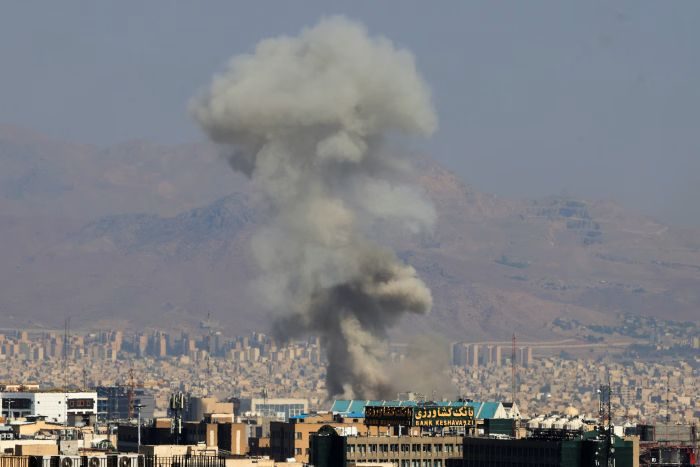
As the political and humanitarian crisis in Gaza remains unresolved, we are witnessing a troubling escalation of violence across the region. On June 13, Israel launched a surprise air campaign on Iran, striking more than 100 sites, including military, nuclear, energy, and civilian infrastructure. These attacks reportedly killed key Iranian military leaders, nuclear scientists, and many civilians—marking a dramatic turning point that derailed ongoing negotiations between Iran and the United States over a renewed nuclear agreement.
In response, Iran launched a wave of missile and drone strikes targeting Israeli military installations and major cities, resulting in dozens of deaths and numerous civilian casualties. Then, on June 21–22, the United States entered the conflict directly, conducting airstrikes on Iranian nuclear facilities in an attempt to degrade their enrichment capabilities. Iran retaliated by striking a U.S. military base in Qatar.
After several terrifying days of escalating violence, a ceasefire was brokered through Qatari mediation and intense U.S. diplomatic pressure. The agreement was announced on June 23 and fully implemented by June 24. In the aftermath, both sides claimed victory: Israel, citing the degradation of Iran’s nuclear and military infrastructure; and Iran, claiming it had survived an existential threat and demonstrated its deterrent strength. Yet in my view, both Israel and Iran are the losers in this confrontation. They have sown deeper hatred, increased regional instability, and set the stage for a future round two.
Meanwhile, as global attention fixated on Iran, the assault on Gaza continued with impunity. During the same 12-day period, Israeli forces killed at least 870 Palestinians, many of whom were deliberately targeted at food distribution centers.
This period also exposed deep fractures not only between governments but within and between communities. After Israel’s attack on Iran, we witnessed public celebrations—cheering crowds, dancing in the streets. When Iranian rockets struck the Palestinian village of Tamra, killing four people, some nearby Israeli communities were heard chanting, “We hope your village burns.” At the same time, videos emerged on social media showing Lebanese neighbors partying on rooftops as missiles fell on Tamra and the surrounding areas. Elsewhere, Palestinians were seen celebrating Iranian strikes on Israeli targets. In shared bomb shelters (where they existed) some Israelis reportedly denied entry to Palestinians and foreign workers seeking refuge.
Surrounded by scenes of hatred, vengeance, and people rejoicing in the death of others, I felt a deep sadness. How can anyone claim the moral high ground while cheering on destruction? In times of war, human character is laid bare. We are confronted with extreme circumstances and profound moral tests. In search of grounding, I turned to a passage in Ephesians 6 to guide my thoughts and response.
Writing from prison, Paul urges the oppressed and persecuted Christian community to “stand their ground” against the powers of evil in the world. That struggle continues today, not only against flesh and blood, but against rulers such as Trump, Netanyahu, and Khamenei, and the authorities of the United States, Israel, and Iran—regimes that often embody the destructive powers of this world. Yet Paul offers a different path of resistance. By putting on the “armor of God,” we commit to resisting with truth and justice, to working for reconciliation, and to guarding our hearts and minds from hatred and despair through faith. Paul took the imagery of Roman military power—the very tools of the empire—and reimagined them as instruments of nonviolent and spiritual resistance. In all circumstances, we are called to have moral clarity and transform what was meant to harm into something that loves and heals.
– Daniel Munayer, Executive Director

Muslim Christian Young Adults Update:
This past weekend, our Muslim-Christian Young Adults gathered for an evening of laughter, games, and meaningful connection. Each person was assigned a color and invited to wear it and bring a snack that matched, creating a vibrant and playful atmosphere. In the midst of today’s nerve-wracking realities, these young adults carry their own burdens—academic pressure, personal challenges, and uncertainty about the future. Yet through this simple, joyful theme, they found space to breathe and build community. We closed the evening by reminding them: our center remains a safe place to decompress, connect, and belong.
– Saleem Anfous, Project Manager

Palestinian and Israeli Women Update:
Our second follow-up meeting, originally scheduled for June 20th, was postponed due to the current situation. Instead, we held an online check-in to give participants space to share and connect.
With women joining from places like Shfa’amr, Jaffa, Tel Aviv, Bethlehem, Jerusalem, and Haifa, each person is experiencing this time differently, but all are facing difficulty. The virtual space offered a moment to process emotions and support one another. Even outside the meeting, the group continues to care deeply—checking in through messages, offering encouragement, and making sure everyone is safe.
Though we cannot meet physically, we’re deeply grateful that the bond between participants remains strong and compassionate during this uncertain time.
– Hiba Allati & Ella Fidan Daniel, Project Managers

Muslim Christian Civil Society Leaders Update:
Earlier in the month and for the first time, Musalaha brought together 16 Muslim and Christian Palestinian civil society leaders from the West Bank and Jerusalem for an encounter in the Jordanian desert of Wadi Rum. The focus of the trip was active listening and identifying obstacles to reconciliation. From the very beginning, the group bonded—starting with the first challenge they faced. One participant was stopped and questioned at the Jericho border and couldn’t cross with the rest of the group. In a collective act of solidarity, the group chose to wait for him. Rather than letting it ruin the day, they showed resilience and unity, making the most of the situation.
One of the highlights for me was the natural chemistry they shared. They genuinely enjoyed every moment together in the desert. Some moments felt almost surreal. Most encouraging of all, the group is already exploring concrete ways to co-advocate for reconciliation within their communities.
– Tamar Haddad, Project Manager

Travel Updates from Salim:
From May 29 to June 1, I had the opportunity to participate in and help lead the Peace and Reconciliation Network (PNR) MENA Summit in Istanbul, Türkiye. Although the gathering had been postponed due to earlier demonstrations, we were grateful to finally come together with leaders from across the Middle East and North Africa—including Lebanon, Egypt, Sudan, Oman, Jordan, Syria, Palestine/Israel, Morocco, and Cyprus.
Throughout the summit, we reflected deeply on the challenges facing our region: widespread hopelessness, ongoing conflicts in places like Gaza and Sudan, and a lack of trustworthy leadership and reconciliation models. We also wrestled with how the Church can respond—prophetically and faithfully—in such times.
As part of our ongoing work, we continued developing a theological foundation for reconciliation in the region and formalized next steps for collaboration, team development, and partnership with the MENA Alliance. A special prayer was created to express our shared convictions and hopes in light of current events—link is here.
– Salim Munayer, Founder & Senior Consultant

Book Excerpt from Reconciling Justice by Salim J. Munayer
In moments of hardship, conflict, and injustice—like the times we are living in now—we are faced with a choice: Who will we be? What habits will shape us?
Pressure reveals our instincts and patterns. Will we respond to injustice with more injustice? Or will we allow ourselves to be formed by the way of Jesus—who calls us not to passivity, but to courageous, restorative love?
As the author of Reconciling Justice remind us:
“The pattern of Jesus’ teaching in the Sermon [on the Mount] is a new way, going well beyond the old patterns of eye-for-eye retribution. And it is not a kind of otherworldly, passive, or stoic refusal to acknowledge our human need for justice. On the contrary, it is clear-eyed about the entrenched systems of injustice at work in conflicted and warring communities”.
– Page 295 from Reconciling Justice, Concepts of Justice in the Multireligious Context of Palestine/Israel by Salim Munayer

Please join us in praying for:
- An end to the genocide in Gaza and the release of hostages.
- Healing for all those impacted by violence in Iran and Israel.
- Our Muslim and Christian Young Adults as they navigate the challenges of daily life, occupation, and geopolitical instability while journeying through the process of reconciliation. Ask God to encourage and strengthen them along the way.
- Praise God for the deep relationships that have been built between Israeli and Palestinian women. Pray that these connections will continue to grow.
- Our Muslim and Christian civil society leaders. May their solidarity deepen and become a powerful force for positive change in their communities.
- Our team in prayer—that we may be refreshed, encouraged, and filled with love and hope as we continue to pursue the hard and holy work of reconciliation.